

Shattered Deterrence
Eight days into the war launched by the United States and Israel against Iran, the central assumption behind the operation has collapsed.
The opening strikes were designed as a decapitation attack. The belief in Washington and Tel Aviv was that a rapid, overwhelming blow would cripple Iran’s command structure, destroy key capabilities, and paralyse retaliation before it could properly begin. Precision would replace prolonged war.
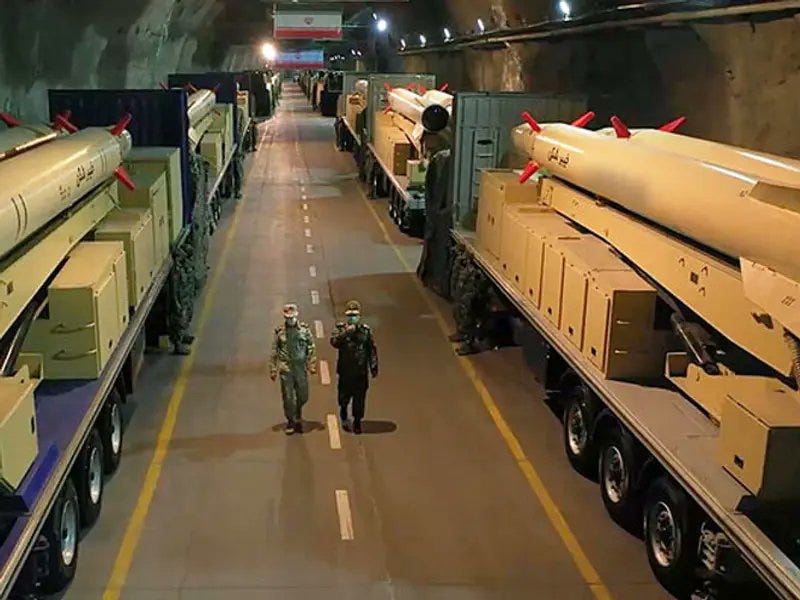
That belief has now collided with reality.
Iran did not collapse into confusion. It responded immediately and repeatedly. Missile and drone strikes have reached Israeli territory in wave after wave, forcing millions into shelters and damaging military installations and infrastructure. The idea that Israeli air defences would absorb the response without serious strain has proven false.
The United States has also been hit.
American positions in the region have come under direct attack, and several of the missile defence systems deployed to protect them have been damaged or destroyed. Reports indicate that between two and four Terminal High Altitude Area Defense (THAAD) batteries have been taken out.
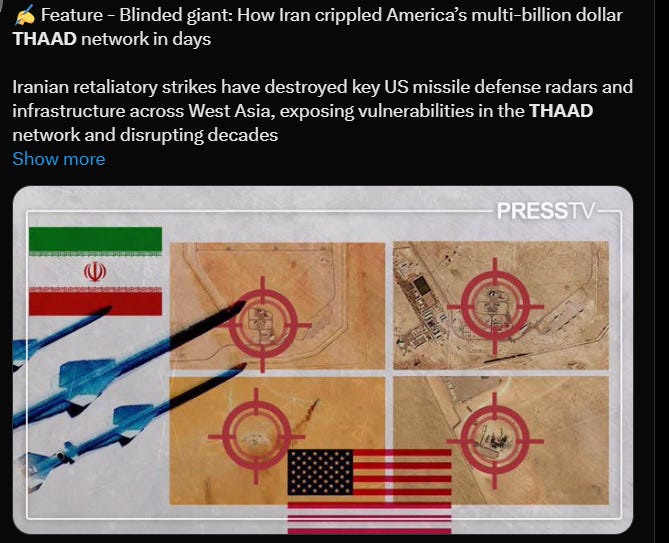
That is not a minor loss. There are only eight such systems in existence worldwide.
The decapitation strategy assumed that Iranian retaliation would be fragmented, disorganised, or severely degraded. Instead, Iran has demonstrated the ability to coordinate sustained strikes across distance and layers of defence. Even the most advanced interception systems can only reduce incoming threats, not eliminate them.
Missiles get through. They always do.
For Israel, the war is already breaking the illusion of control that surrounded the opening days. The promise was that precision strikes would restore deterrence. Instead, Israel is facing sustained incoming fire from a state with the industrial and technological capacity to continue the exchange.
That reality has triggered another striking development. Israeli officials and commentators are now loudly accusing Iran of violating the rules of war by striking cities and critical infrastructure.
The reaction outside Israel has been noticeably restrained.
For months in Gaza and in Lebanon, Israel pushed those same rules to their limits and well beyond. Entire districts were flattened. Civilian infrastructure was repeatedly destroyed. Hospitals, schools, refugee camps and residential areas became part of the battlefield while Israeli officials insisted that international law was being respected.
When a state spends months demonstrating how elastic those rules can be, its sudden appeals to them lose credibility. Many governments remain politically aligned with Israel, but public opinion across much of the world is far less receptive to moral arguments that appear selectively applied.
The credibility gap is now unmistakable.
Militarily, the war is exposing something Israel has rarely faced in recent decades: sustained retaliation from a state with comparable technological reach. Conflicts with Hamas or Hezbollah inflicted pain, but they never produced this level of symmetrical exchange.
Iran has large missile inventories, layered drone capabilities, and the capacity to sustain pressure over time. Air defence systems can intercept many incoming weapons, but not all of them. Every successful strike changes the psychological balance of the conflict.
Deterrence relies as much on perception as on firepower. That perception is now eroding.
Inside Iran, the political consequences are exactly what history predicts. External attack seems to have unified a society that was deeply divided only weeks ago. A government under domestic pressure has been handed the powerful narrative of national resistance. In wartime, nationalism compresses internal disputes and redirects anger outward.
The decapitation strike was meant to weaken the system. Instead it has reinforced it.
Eight days in, the strategic picture is already clear. The opening strikes did not produce paralysis. They produced escalation. Deterrence did not return. It disappeared. Important though, the price Iranians are paying is steep, because the US and Israel have killed a huge number of civilian Iranis.
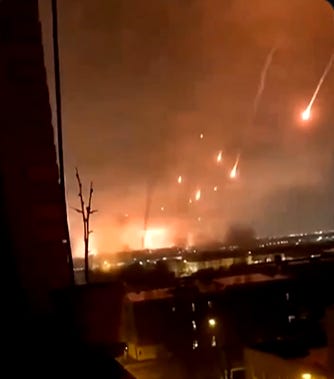
And the belief that overwhelming force could deliver a quick, controlled outcome has been replaced by something far more familiar in modern warfare.
A conflict that no one can now easily stop.
We pray for victory against the Devil IsRael states of america. The Antichrist.