

Map-politics
Tech, power, and the politics of erasure
We used to think reality was self-evident. That if something could be seen, it could not be denied. I’m no longer sure that holds.
In April 2026, users began reporting something unusual on Apple Maps, operated by Apple.
Large parts of southern Lebanon appeared stripped of detail. Village names were missing. Entire populated areas looked, at first glance, almost empty. At the same time, the same locations remained clearly labelled on other map services, such as Google Maps.
Screenshots spread rapidly across social platforms, alongside accusations that this was not a technical issue but something more deliberate.
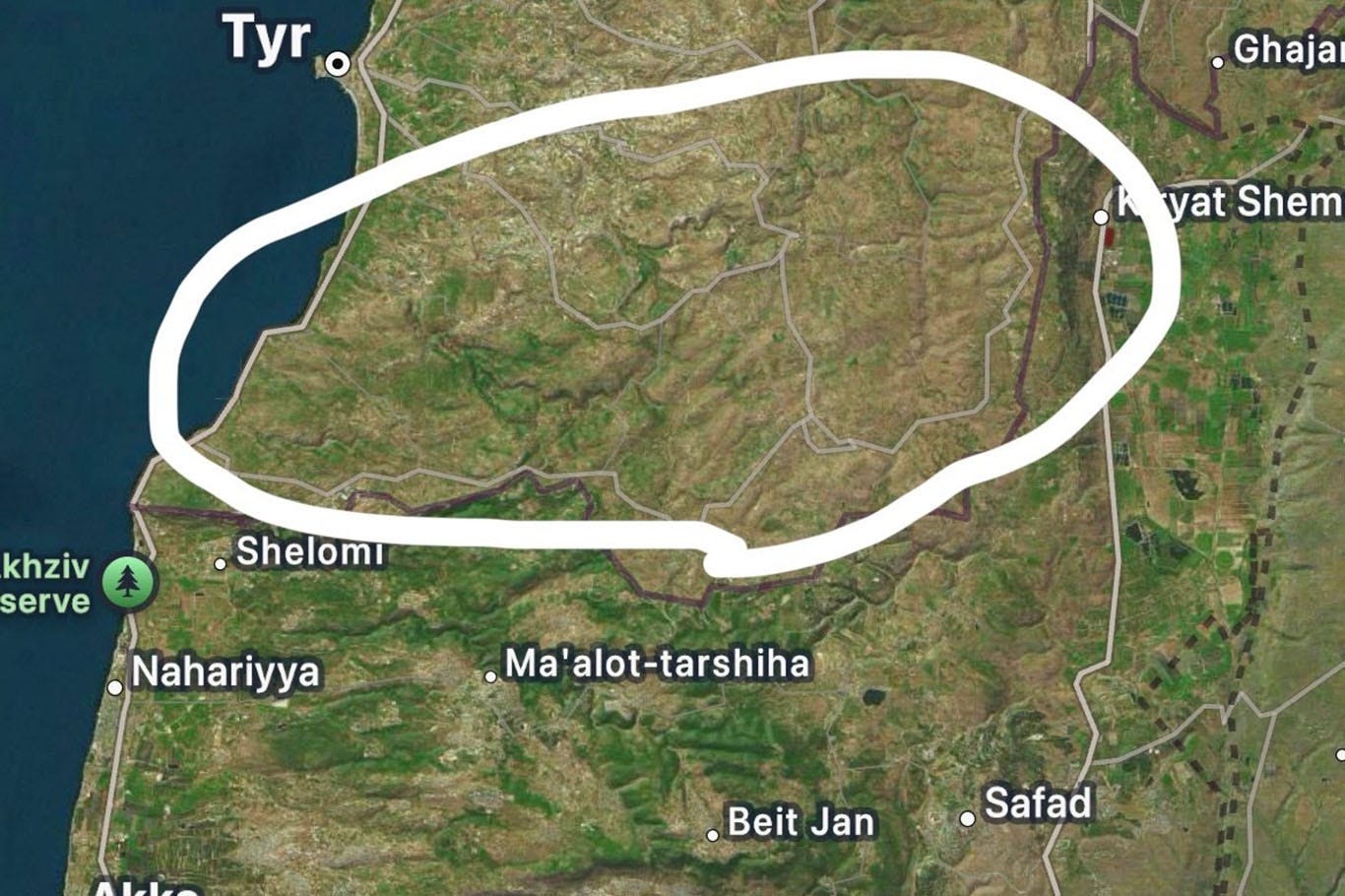
The timing made the reaction inevitable. Tensions between Israel and Hezbollah were already escalating. Anything related to geography in that region carries political weight.
The official explanation
Apple’s position has been consistent, nothing was removed. According to the company, the missing labels were either:
never included at that level of detail
dependent on zoom level and data availability
or part of incomplete regional mapping coverage
On a technical level, this explanation is not impossible, but the problem is not whether an explanation exists. The problem is whether it is convincing.
The core issue
Because people aren’t reacting to an abstract claim. They’re reacting to what they believe they can see, and to what many say they’ve seen before, the same locations previously labelled, now appearing differently.
Apple insists that nothing changed, that nothing was removed, that what people are seeing is based on a misunderstanding. This is the new pattern. Not denial of visibility, but redefinition of it. This is not limited to maps.
We see it in politics, media, and increasingly in digital systems that shape perception. Even when something is visibly constructed, even when it clearly pushes the boundaries of credibility, large numbers of people will still accept it if it aligns with their existing worldview.
The same dynamic appears in political communication around Donald Trump, where symbolic imagery and highly polarised interpretations can be explained in a manner which contradicts what we can see with our own eyes.

The image itself becomes secondary to the narrative built around it.
We are entering a system where evidence is no longer self-validating, explanation overrides observation, and authority determines interpretation, and this is what I find the most interesting in these developments, for me this is the real transformation. Not that people cannot see what is in front of them, but that seeing it is no longer decisive.
People are, in effect, being asked to question what they believe they can see with their own eyes.
Whyactivists are paying attention
This is exactly the space where movements like Tech for Palestine and No Tech for Apartheid position themselves.
Their argument is not just about individual incidents. It is about structure:
platforms are not neutral
infrastructure shapes perception
and visibility is unevenly distributed
Even if you disagrees with their conclusions, their core claim touches something real: digital systems do not just reflect reality. They organise it. And what is missing can matter as much as what is present.
The credibility problem
Even if we assume the most charitable explanation for Apple, the issue does not disappear.
Because trust is not built on technical correctness alone. It is built on consistency between what people see and what they are told to believe. When that alignment breaks, explanations stop resolving uncertainty. They start creating it.
And once that happens, every incident becomes part of a larger suspicion.
Final thought
Maps were once seen as neutral representations of the world. That assumption no longer holds. They are curated systems of visibility. Decisions about inclusion, detail, and emphasis shape how places are understood.
So when something disappears, even partially, people will notice. And when they are told it did not happen, despite what they can see, they will not simply accept it. They will question the system that requires them not to trust their own eyes.
And that is where the real conflict begins.
I love my Apple devices, but when my phone becomes end of life, i will move to a Chinese handset with Android OS and then all the other peripherals can also be replaced.
The goal should always be to not cut off your nose to spite your face, but for us to have long term thinking to move away from products that don't support us...